
Emora
Project Overview
Designing an AI-powered wearable ecosystem that helps children with
autism recognize emotions, build confidence, and strengthen everyday social
interactions.
The Problem
Children with autism can find it difficult to understand emotional cues in real
time, making social interactions overwhelming and limiting opportunities to
build confidence and meaningful connections.
The Solution
Emora is an AI-powered wearable ecosystem that combines smart glasses, a
haptic bracelet, and companion apps to help children recognize emotions,
practice social skills, and give parents insights that support long-term
emotional growth.
This quarter, I worked on Emora, a concept developed for the SCAD Startup 2026 design sprint that explores how AI can support children with autism in understanding emotions during everyday social interactions. In just two weeks, our team designed a connected ecosystem that combines AI-powered smart glasses, a haptic bracelet, a children's learning app, and a parent companion app to provide real-time emotional guidance while reinforcing long-term learning.
Grounded in user research and accessibility, the project focused on creating technology that feels supportive rather than distracting. Every part of the ecosystem was designed to encourage natural social interactions, reduce sensory overload, and provide meaningful insights for caregivers.
Through Emora, we explored how wearable technology and companion applications can work together to create a more inclusive and empathetic approach to emotional learning.
Key Contribution

Assisted in designing the Emora learning app to support children's emotional learning.

Helped create the presentation deck and design brief used to pitch Emora to Startup judges.

Designed visual assets and product mockups to bring the Emora ecosystem to life.
Research Method
90123
Competitive Analyses
Analyzed three existing solutions to identify market gaps and design opportunities.
78901
Startup Mentor
Received feedback from a SCAD Startup mentor to refine the product concept and presentation.
78901
User Interview
Interviewed a child with autism to better understand their needs, behaviors, and daily experiences.
89012week
Design Sprint
Completed the end-to-end concept in a two-week collaborative design sprint.
Secondary Research


Key Findings
01
Bright visuals, audio cues, and constant feedback increase sensory overload.
02
Existing solutions distract children with screens/prompts during social interactions.
03
Families need confidence that emotional data is handled securely and responsibly.
Our Design Principles

01
Technology should support children without drawing attention or interrupting conversations.

02
Real-world guidance should be reinforced with simple, interactive lessons children can practice over time.

03
Children and parents each need different tools, but they should work together as one connected experience.

04
Sensitive emotional data should be handled responsibly and transparently to build confidence with families.
Final Design
Our final solution combines AI-powered wearables and companion apps into one connected ecosystem that supports children's emotional learning before, during, and after everyday social interactions.
Emora brings together AI-powered smart glasses, a haptic bracelet, a children's learning app, and a parent companion app into one seamless experience. Each product addresses a different stage of emotional learning while working together to provide consistent, real-time support.
By combining subtle wearable guidance with guided practice and caregiver insights, the final concept encourages natural social interactions while helping children build confidence and supporting parents throughout their child's emotional development.
Emora for Kids
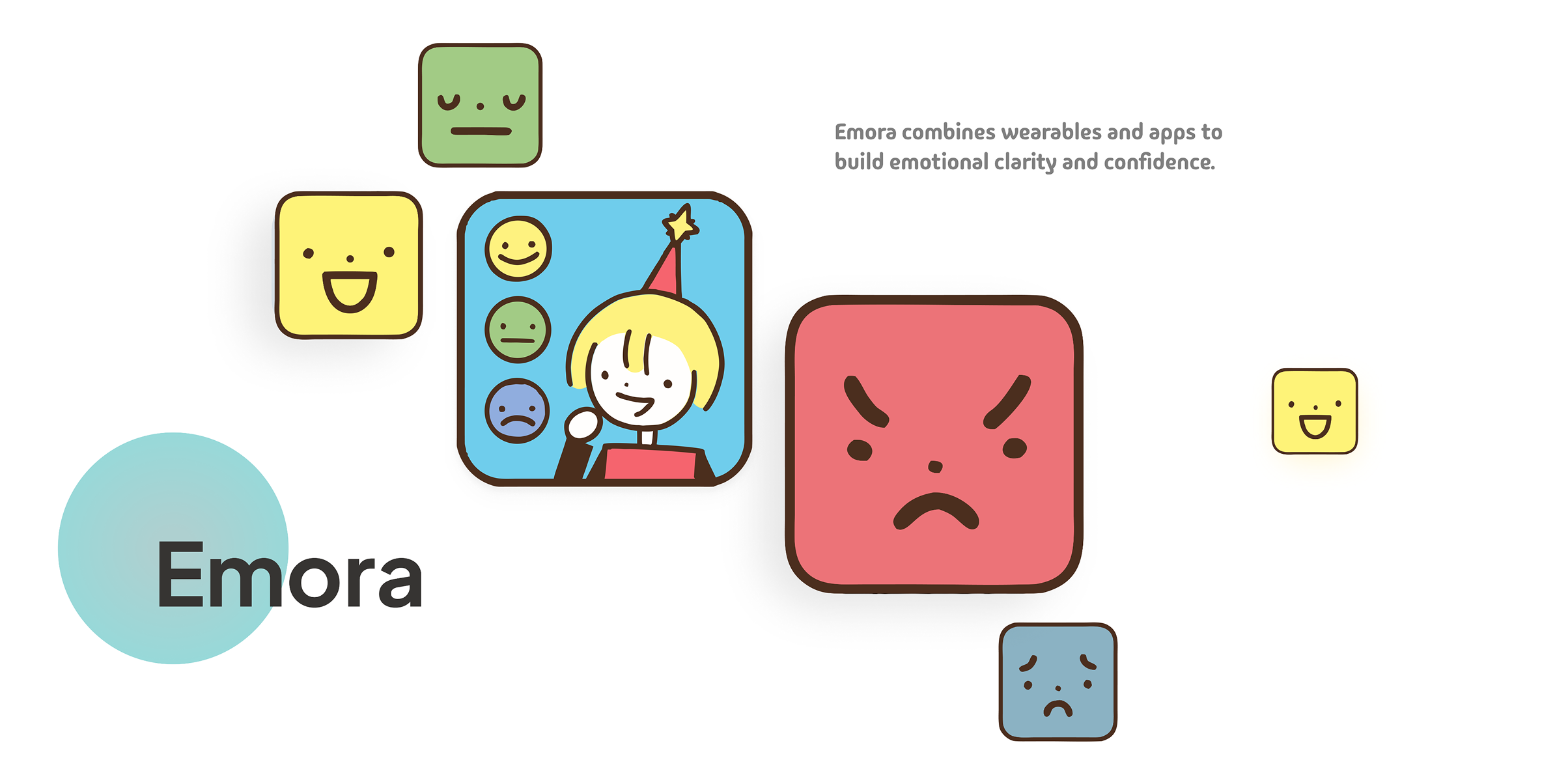
The Emora app teaches emotional recognition through guided practice and interactive scenarios. Children learn how to identify emotions and understand the color cues used throughout the Emora ecosystem.
Emora Glasses + Bracelet
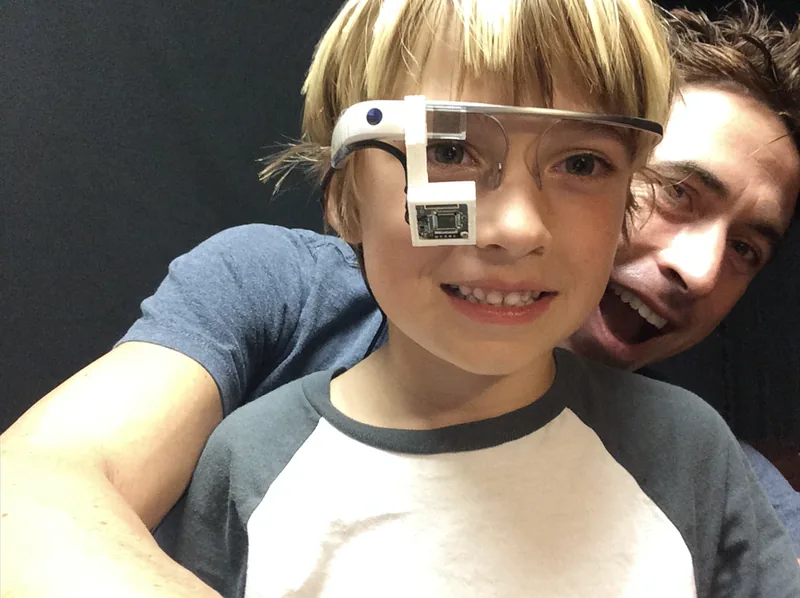
The AI-powered smart glasses detect facial expressions and emotional cues in real time. Instead of interrupting conversations, the bracelet provides children with subtle haptic guidance during social interactions.
Emora Companion App
The parent companion app helps caregivers identify emotional triggers, track their child's progress over time, and better understand their emotional needs through meaningful insights.
Takeaway
Designing with empathy means moving quickly without losing sight of the people you're designing for.
Working on Emora taught me how to balance the pace of a two-week startup sprint with the responsibility of designing for a sensitive topic like autism. Every design decision required thoughtful research, empathy, and collaboration to ensure the experience felt supportive, accessible, and respectful of children's unique needs. This project strengthened my ability to design under tight deadlines while creating solutions that put people first.
It also reinforced the importance of listening to users and letting research guide every design decision. Most importantly, I learned that meaningful innovation comes from creating technology that empowers people without overshadowing their everyday experiences.
If This Caught Your Eye, Try These